
Your Website and The Carbon Footprint It Leaves Behind
You’ve probably never thought about your website’s carbon footprint. However, an astounding number of them go this route.
Every time a user visits a website, the server powering it consumes power. That power has to come from somewhere. In many cases, it comes from fossil fuels. Not great.
The Internet would rank as the fourth biggest polluter on the planet if it were its own country. The world has an estimated 3.7% of its digital services footprint as a recognized pollutant. And that number keeps growing.
Your Website Leaves a Trail
Your site lives on a server inside a data center. That center runs all day, every day. It needs power to run the servers and more power to keep them cool. Even building the equipment takes energy. Mines dig out rare metals. Factories build the gear. Then trucks and ships haul it all across the globe. All of that adds up fast.
The average website emits about 60 kg of carbon dioxide per year. That’s like driving 270 miles. Now multiply that across 193 million active websites—big problem.
Green Hosting: The Simple Fix

Green hosting means your site runs on clean energy. Solar, wind, hydro. No fossil fuels.
Good green hosts keep their servers running for years. They don’t toss out old gear just because it hits a certain age. Hosts reuse or recycle the old servers. Less waste. Less carbon. Your site’s footprint drops in a real, clear way.
How to Pick a Good Green Host
Not every “green” host is truly green. Here’s what to check:
- Look at their energy use score. A score close to 1.0 means they waste almost no energy
- Ask if they use real clean energy or just buy offsets to mask fossil fuel use
- Find out how they handle old servers. Do they recycle or just dump them?
You can use the Green Web Foundation’s free tool to check any host in just a few seconds.
Distance Matters More Than You Think
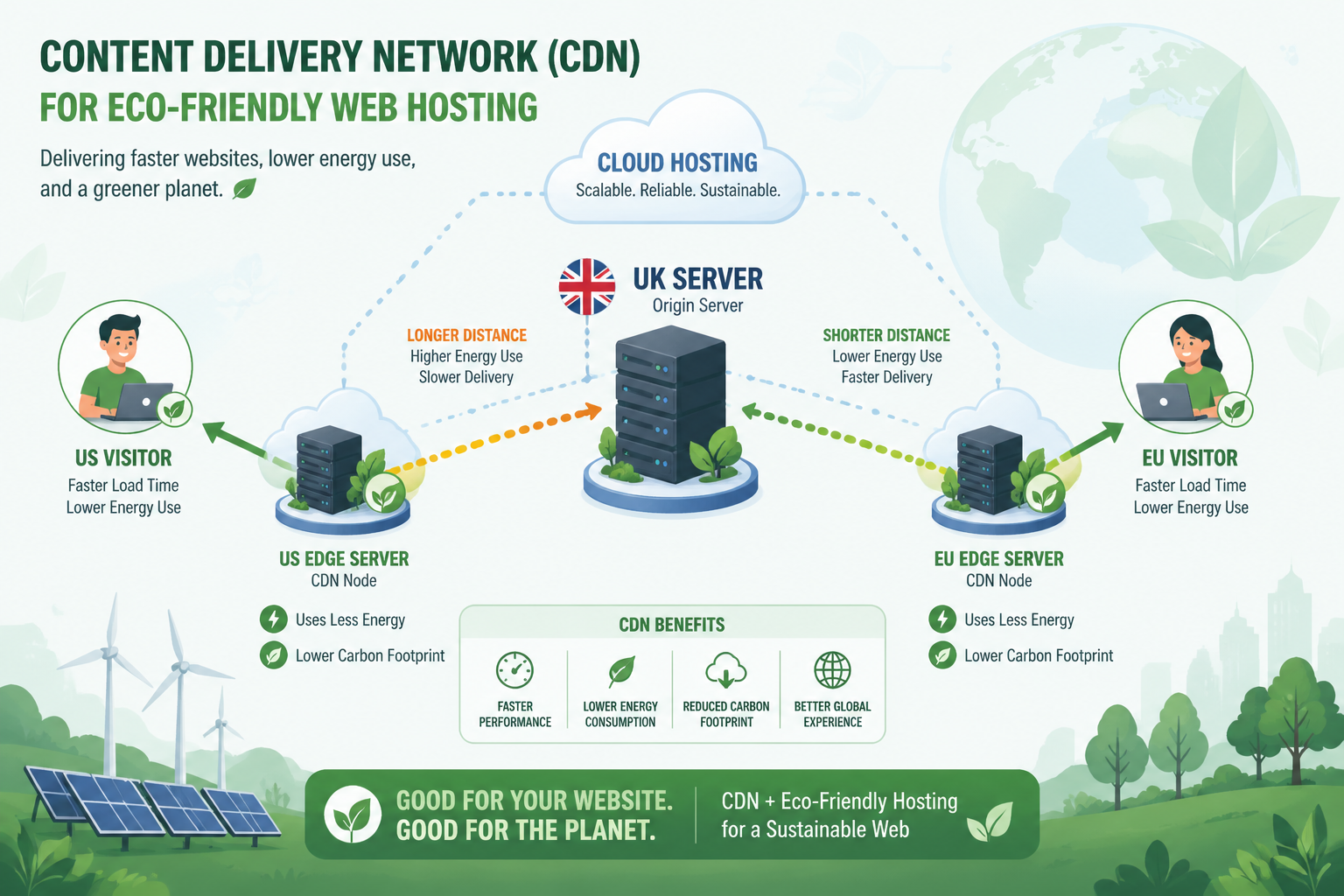
Even with a green host, location plays a big role. A visitor in the US loading your UK-based site burns more power than someone nearby. The data has to travel farther. Servers burn more energy.
A content delivery network solves this. It keeps a copy of your site closer to your visitors. Less travel means less energy. Your pages also load faster. Both sides win.
Just check that your content delivery network provider also uses green energy.—No point fixing one problem only to create another.
Why It Also Makes Business Sense
Your business can benefit from green hosting. You’re about to be impacted by new regulations requiring businesses to cut their carbon footprints. You could be winning by getting ahead of all your competitors.
Your website contributes to your overall carbon footprint, no matter how small or insignificant it may seem. Switching to a green host is a step in the right direction.